Antifreeze for sprinkler systems
Ready for action at any time in the event of a fire
If a fire breaks out in high-rise buildings, hotels, large production halls or warehouses, or in tunnels, the fire service needs time to get ready with hoses and other fire-fighting equipment. In the initial stages, an automatic fire-extinguishing system supports the fire service and can contain the fire. Ideally, a sprinkler system is never activated, but it must be ready for use at all times! For this reason, it is often designed as a wet system, which ensures constant water pressure in the connected fire protection pipework and is immediately ready for use.
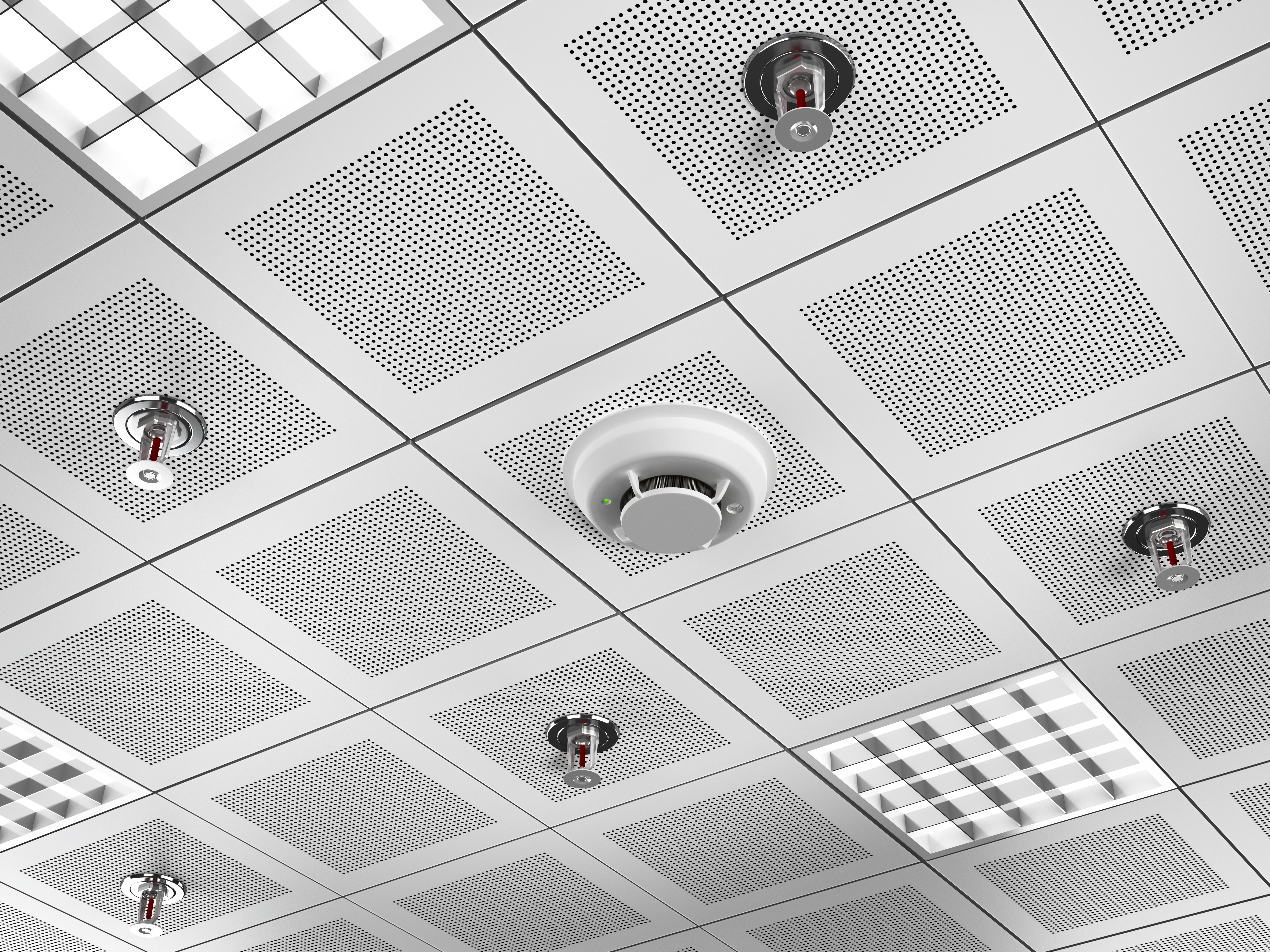
The head of a sprinkler is sealed with a small, temperature-sensitive glass ampoule which bursts when the activation temperature is reached, triggering the fire-extinguishing system. These ampoules are filled with a specially coloured liquid and contain an air bubble that compensates for normal fluctuations in air pressure. The colour of the liquid indicates the activation temperature. If the air pressure rises above the activation point, the ampoule bursts and opens the plug to the water supply. This allows water to flow into the activated sprinklers and be distributed. Only the sprinklers in the immediate vicinity of the source of the fire are activated. Once the fire has been extinguished, the sprinklers are replaced and the system is operational again.
Enquire about sprinkler system heating
Electrical heat tracing solution for pipework systems
To ensure the long-term availability of sprinkler systems, the water-carrying fire protection pipework must be protected against frost in cold weather. Effective frost protection and the prevention of sprinkler pipes freezing are therefore not optional extras, but mandatory requirements for any wet system installed in a building with pipe sections at risk of freezing. Electric trace heating is used for this purpose. It ensures immediate operational readiness and maintains the quality of the entire fire-suppression system. The heating tape is attached to the pipe using aluminium adhesive tape and routed through a junction box into a suitable control cabinet. The entire trace heating system is designed as a cascade system. The system’s redundancy ensures safety in the event of a fire, even if one heating circuit fails.
Standards, approvals and regulations play an important role in the design and installation of trace heating systems for sprinkler applications. In Europe, sprinkler systems must comply with EN 12845 (Fixed firefighting systems – Automatic sprinkler systems), which sets out the requirements for the design, installation and maintenance of systems, including frost protection measures for wet systems.
As every second counts in the event of a fire, wet systems have the major advantage over dry systems of a shorter response time. Dry systems are filled with air rather than water and are only flooded with water in the event of a fire.
Although this makes them inherently frost-proof, they take longer to start extinguishing a fire. Wet systems, on the other hand, rely on effective frost protection for all water-carrying fire protection pipework in order to remain operational all year round – and this is precisely where electric trace heating offers the crucial solution for preventing sprinkler pipes from freezing.
Key facts
- rapid response time in the event of a fire
- redundant system design
Control technology is key to the reliable operation of the pipe trace heating system. Temperature sensors are installed at representative points along the pipework where frost is a risk. These sensors transmit readings to the trace heating controllers, which switch the heating circuits on and off based on configurable setpoint temperatures; typically, they are activated at around +5 °C and deactivated once a safe temperature has been restored.


FAQ
A sprinkler system does not replace the fire service in the event of a fire; it merely complements it! The fire service needs valuable time to set up its fire-fighting system, from the hydrant to the scene of the fire. During this time, a sprinkler system can begin to contain the fire.
The wet fire-extinguishing system is constantly under water pressure and is therefore less prone to delays and ready for use more quickly. It can also contain the spread of the fire at an earlier stage.
Each sprinkler head contains an ampoule with a special coloured solution and an air bubble. The air bubble compensates for normal fluctuations in air pressure. If the temperature rises too high due to a fire and the air pressure becomes too high, the ampoule bursts, dislodging a plug from the water pipe. The water then flows through the relevant sprinkler head and contains the fire.
To ensure that the entire system functions in the event of a fire, frost protection for all water-carrying pipes is essential during the colder months. Frost causes the water in the pipes to freeze, which means that no water is available for firefighting. Furthermore, pipes may burst or become damaged, preventing the system from functioning properly in the event of a fire.
As the trace heating system is designed as a cascade system with several independent heating circuits, the failure of a single circuit does not jeopardise frost protection for the entire sprinkler network. Only the specific section of pipework supplied by the affected circuit loses its active heating; all other circuits continue to operate normally. The monitoring system detects the fault immediately via the circuit’s dedicated controller and triggers an alarm – either locally at the control cabinet or centrally via the building automation system – so that maintenance staff can be dispatched immediately. This is precisely the safety advantage of the cascade architecture over a single-circuit design: no single point of failure can take the entire wet system out of operation.
Yes – retrofitting electric trace heating to existing fire protection pipework does not usually require the sprinkler system to be drained or taken out of service. The self-regulating heating cable or fixed-resistance cable is fitted to the outside of the pipe and secured with aluminium adhesive tape.
Maintaining a sprinkler trace heating system is generally straightforward and requires little maintenance – a key advantage of this method of frost protection. The recommended annual maintenance procedure comprises: a visual inspection of all accessible heating cables, junction boxes and end caps for mechanical damage, moisture ingress or corrosion; a functional test of all heating circuits by verifying the current flow and comparing it with the commissioning data; checking all temperature sensors for correct readings; testing all alarm outputs and controller functions; and reviewing the operating log for any recorded faults.