Sustainable wind energy
Using electrical heat tracing
A wind power plant (also known as a wind farm) is a group of at least three wind turbines or wind power plants located in one place. They generate electricity from wind energy and can be built on land or at sea. Wind turbines may form a single unit from a technical or organisational perspective, but may also be operated by different operators. They are a key component of the energy transition, as they generate environmentally friendly, renewable energy and do not produce greenhouse gases or other harmful emissions. Fossil fuels such as coal, oil or gas, by contrast, are only available in limited quantities and contribute to air pollution. The energy generated in wind farms helps to meet growing energy demand.
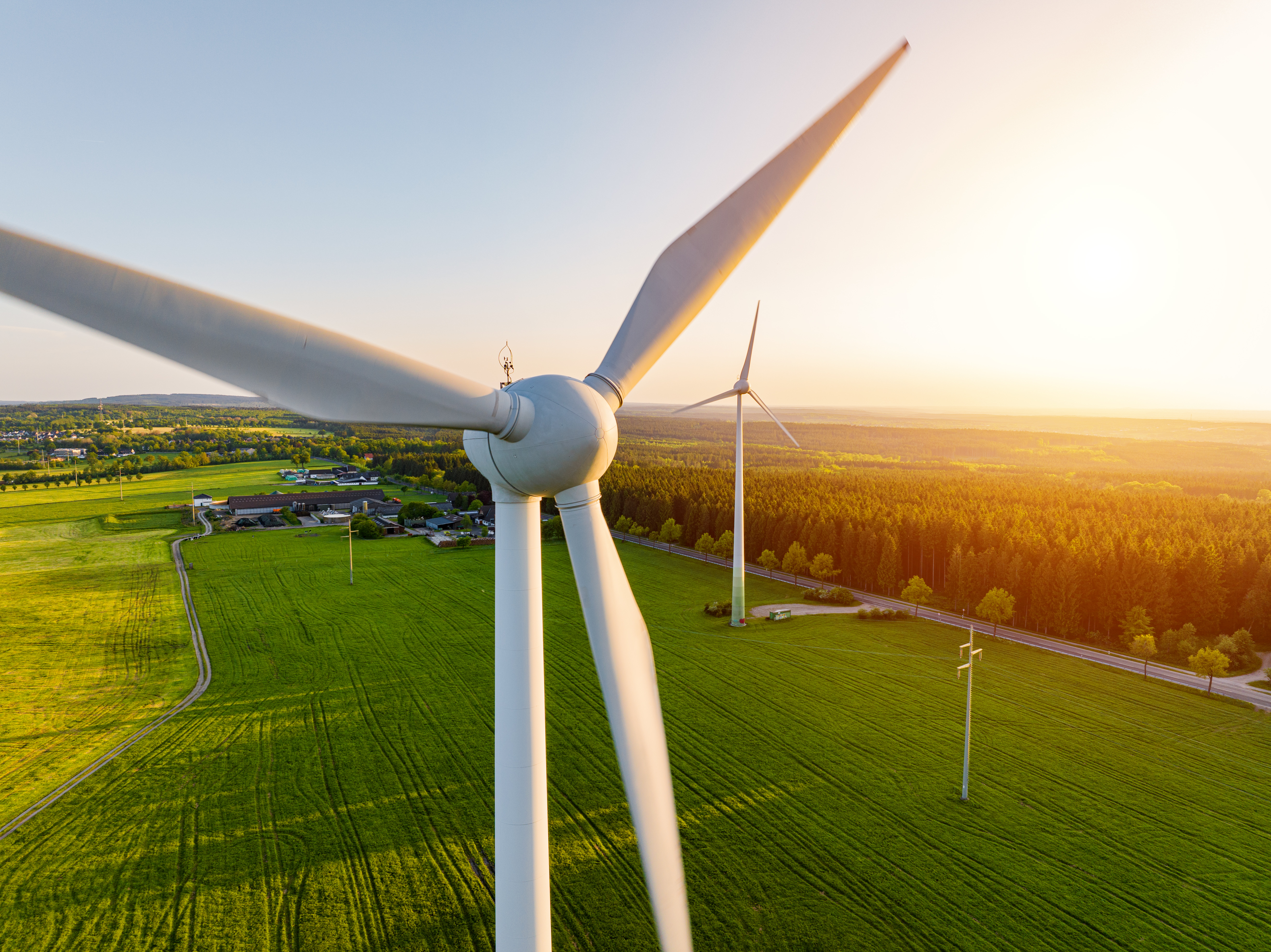
A wind turbine consists of a turbine and a generator. The turbine comprises rotor blades that extend into the air from a tower and rotate. The rotor blades are curved in a similar way to the wings of an aeroplane. This means that the wind has to travel a longer distance over the top of the blades than it does underneath them. This creates a low-pressure area, which converts the wind’s energy into mechanical energy. The connected generator then converts this mechanical energy into electrical current and feeds it into the electricity grid. The taller a wind turbine is, the more electricity it can generate, as the wind blows stronger and more consistently at higher altitudes.
Electrical heat tracing during operation
Electrical heat tracing is used in two different ways in relation to wind turbines. On the one hand, the heating provides frost protection for the battery packs and the wind turbine’s crankcase; on the other hand, it is used to maintain the temperature during the curing of GRP in rotor blade production.
The rotor blades of a wind turbine are often made from GRP. GRP is a glass-fibre-reinforced plastic that is both very light and very robust. It is highly durable, weather-resistant and hail-resistant. The rotor blades are moulded in two halves and later assembled. To ensure the GRP cures optimally, the mould is heated using electric trace heating. The heating activates the material and initiates the drying process. The heating cable used is placed directly into the mould for this purpose. The two rotor blade halves are subsequently joined using wet lamination. To ensure the materials bond together effectively, they are brought up to temperature and maintained at that level using heating sleeves.
Furthermore, an electric trace heating system from eltherm is used on the wind turbine itself. As a wind turbine is erected at a certain height and is exposed to all weather conditions, the battery packs and the crankcase must be protected from frost in order to remain fully functional. Among other things, the heating cables used ensure that the hydraulic oil is maintained at the optimum temperature. It must neither lose its viscosity and harden nor become too hot, as this could damage the seals.

Key facts
- temperature control for optimum GRP curing
- maintaining optimal material properties when joining the two rotor blade halves using wet laminate
- maintaining the viscosity of the hydraulic oil in the wind turbine


FAQ
Temperature plays a crucial role in ensuring that the resins used cure properly. Some resins cure at room temperature, whilst others require heat to harden. For this reason, electric trace heating is used to ensure that the resins solidify more quickly and effectively.
In principle, the rotor blades must be protected against ice formation. However, due to the wind turbine’s constant rotational movement, a hot-air blower is usually used for this purpose rather than an electric trace heating system.
Electric trace heating is used on the wind turbine to protect the hydraulic oils from freezing in cold temperatures and to maintain their viscosity and functionality.