Electrical heat tracing for heat pumps
Reliable heat generation thanks to frost protection
Heat pumps are used to extract freely available energy from the environment to heat rooms or water. They therefore offer an efficient and environmentally friendly method of heating. This naturally available energy comes from the ground, groundwater, the air or the sun.
A heat pump works in a similar way to a fridge, only in reverse: whilst a fridge transfers heat outwards, a heat pump draws energy into the living space via the connected heating system. To achieve this, a refrigerant is repeatedly vaporised and liquefied, so that with each cycle it releases more heat than it has absorbed. The entire system requires very little electricity to power the motor and pump, and the user is less dependent on fossil fuels such as oil or gas. The heat pump therefore also helps to reduce CO₂ emissions. It is an environmentally friendly method of heat generation!
However, to ensure the heat pump remains an efficient long-term investment, certain components must be heated to remain operational in all weather conditions.
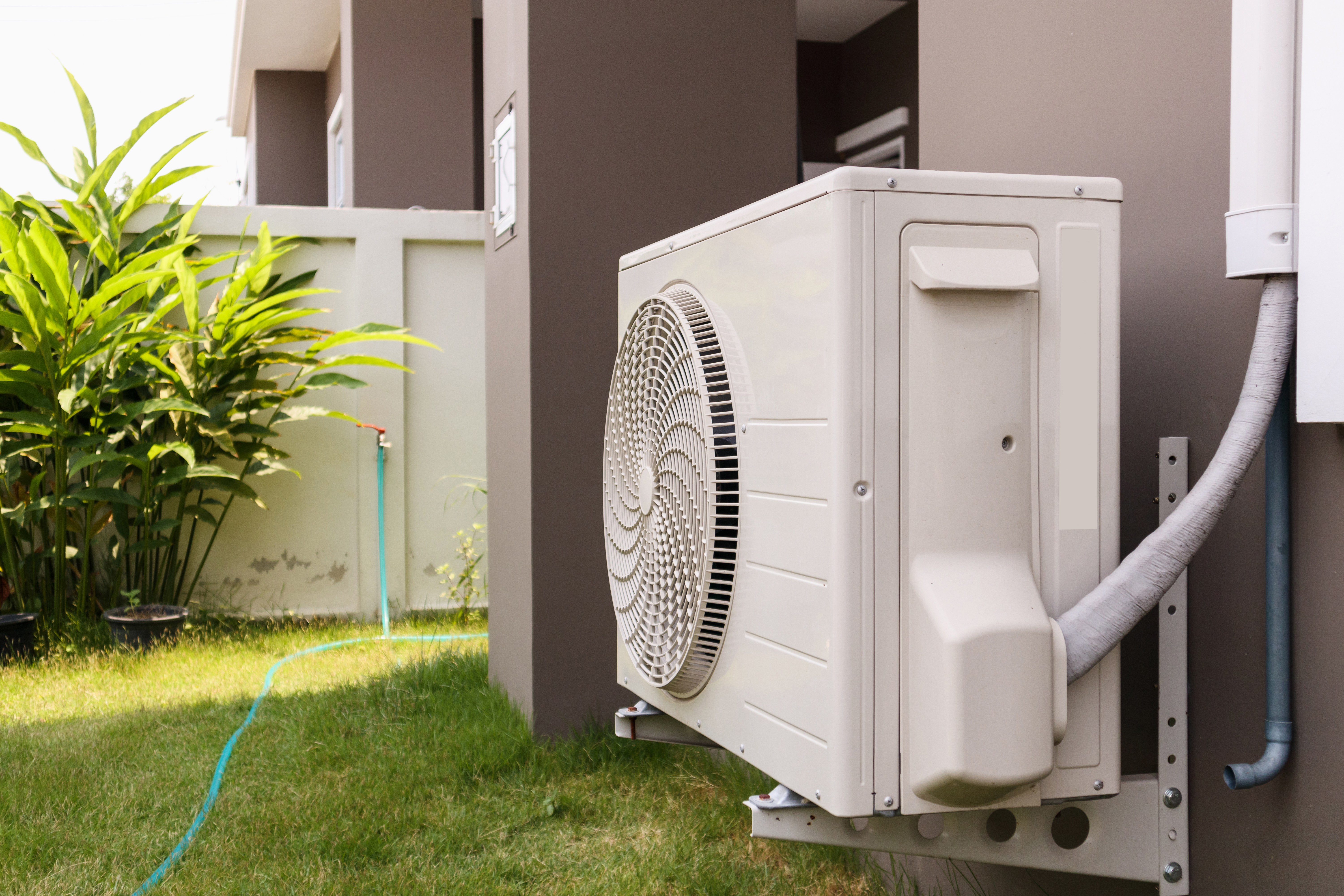
Protection against frost and condensation
To ensure a heat pump operates at its best throughout the year, an electric trace heating system is required.
On the one hand, the electric trace heating is fitted to the evaporator to heat the nozzle ring around the axial fan. As the flow through this nozzle causes differences in temperature and pressure, heating is necessary to protect the components from frost. If no heating system is used, ice crystals may form and cause damage to the system in the medium term. To prevent this, a heating cable is wrapped around the nozzle ring.
Why does icing occur?
During the heat extraction process, the temperature of the refrigerant in the evaporator drops well below the ambient air temperature – the evaporator surface can reach temperatures of between -5 °C and -15 °C, even when the outside temperature is only just above freezing. When moist air is drawn over the cold evaporator tubes by the axial fan, the moisture in the air condenses and freezes immediately on contact. In addition, the Venturi effect at the nozzle ring causes a localised drop in pressure, which further lowers the temperature at this critical point and makes it particularly susceptible to ice crystal formation and hoar frost deposits – hence the need for reliable heat pump anti-icing protection.

The electric trace heating on the nozzle ring is typically activated when the ambient temperature falls below approximately +5 °C and, at the same time, the relative humidity is above 70 per cent – conditions under which spontaneous icing can occur within minutes. If no anti-icing protection is used, the consequences can be serious: the growing layer of ice obstructs the airflow through the evaporator, reduces heat removal efficiency and overloads the compressor. In advanced stages, ice build-up can block the axial fan, cause bearing damage to the rotor or completely block the nozzle ring – resulting in a safety shutdown and, in the worst case, irreparable equipment failure.
Secondly, the condensate collection tray of the heat pump’s outdoor unit is heated. Condensate water is collected in this tray. However, in cold weather, the condensate would freeze directly in the collection tray and spread upwards, where it could impair the evaporator. To prevent this, the drip tray and the downstream drain are heated. The condensate collection tray is particularly at risk during and after active defrost cycles. Modern heat pumps regularly reverse the refrigerant cycle to defrost the evaporator, thereby producing defrost water which drains into the drip tray. If the drip tray heater is missing, this defrost water freezes immediately at sub-zero temperatures. Similarly, the condensate drain pipe – protected by a condensate drain heater – is susceptible to the condensate drain freezing. For this reason, the drip tray and drain are heated continuously or via a thermostat as soon as the ambient temperature falls below 0°C. If the heating fails and the icing goes unnoticed, the resulting ice build-up can damage the basic structure of the outdoor unit, cause drain pipes to burst and, if it comes into contact with the fan blades, lead to complete unit failure.
Key facts
- Compensating for the effects of differences in temperature and pressure points.
- Protection against frost and ice crystal formation.
- Maintaining the heat pump’s functionality.
Fixed-resistance heating cables or self-regulating heating tapes are used for electric trace heating on heat pumps. The heating cables are controlled by measurement and control technology tailored to the overall system. The choice between the different cable types depends on the specific application. Self-regulating heating cables are the preferred solution for condensate drain pipes and drip trays: they automatically reduce their heat output when the surface temperature rises, thereby preventing overheating and saving energy. Their ability to be cut to length also makes them ideal for retrofitting. Fixed-resistance heating cables deliver a constant, defined heat output per metre – making them the right choice for the nozzle ring, where precise, uniform heat output is required.


FAQ
A heat pump works in a similar way to a fridge, but in reverse. It uses freely available energy from the environment to transfer heat into the living space via the connected heating system. This energy can then be used for heating or hot water. The freely available energy comes, for example, from the ground, groundwater, the air or the sun. In this way, the heat pump provides a sustainable source of heat, which also reduces CO₂ emissions.
As temperature and pressure differentials occur in the outdoor unit during operation, ice crystals may form in cold weather and accumulate on the rotor or the nozzle ring. This impairs their function and causes long-term damage to the heat pump.
Any condensate is collected in a drip tray. As it would freeze immediately in cold weather and spread upwards, the collection tray and the drain are heated.
Not every heat pump requires electric trace heating as standard – in practice, however, all air-source heat pumps in climate zones with winter temperatures below +5°C benefit significantly from anti-icing protection. Ground-source and groundwater heat pumps are largely unaffected by icing of external components. However, their condensate drain pipes may require a condensate drain heater if they run through unheated rooms. The need for anti-icing protection is greatest for air-to-water and air-to-air heat pumps, particularly in locations with high humidity and temperatures just below freezing.
Yes, anti-freeze heating systems can usually be retrofitted to existing heat pump outdoor units; eltherm offers retrofit-compatible, self-regulating heating cable solutions that can be adapted to most makes and models.